
Alternative Imagination
Not another article on AI; this is a no-slop zone

Back in 1909, when opening his eponymous store on Oxford Street, Harry Selfridge proclaimed, “Treat the customer as guests when they come and when they go, whether or not they buy”. And, over 115 years later, that approach has never been more relevant.
And, in that intervening period, retail has largely remained the same, or rather, the concept of commerce has. Except, it hasn’t. Our desire for “stuff” may remain undiminished - the only difference being that now, in the main, it is China and Southeast Asia that sate our collective appetites.
But whilst the concept of shopping remains as it did in Harry Selfridge’s day, over the years, there have been a number of pivotal moments which have shaped and disrupted not only the nature of shopping, but the relationship between retailers and their customers. And we’re about to enter what will be the most disruptive of all.
But before we get into that, let’s look back on those moments that have had such a profound impact on retail and why it is important to view this next era in the context of the past.
1916: Self-service
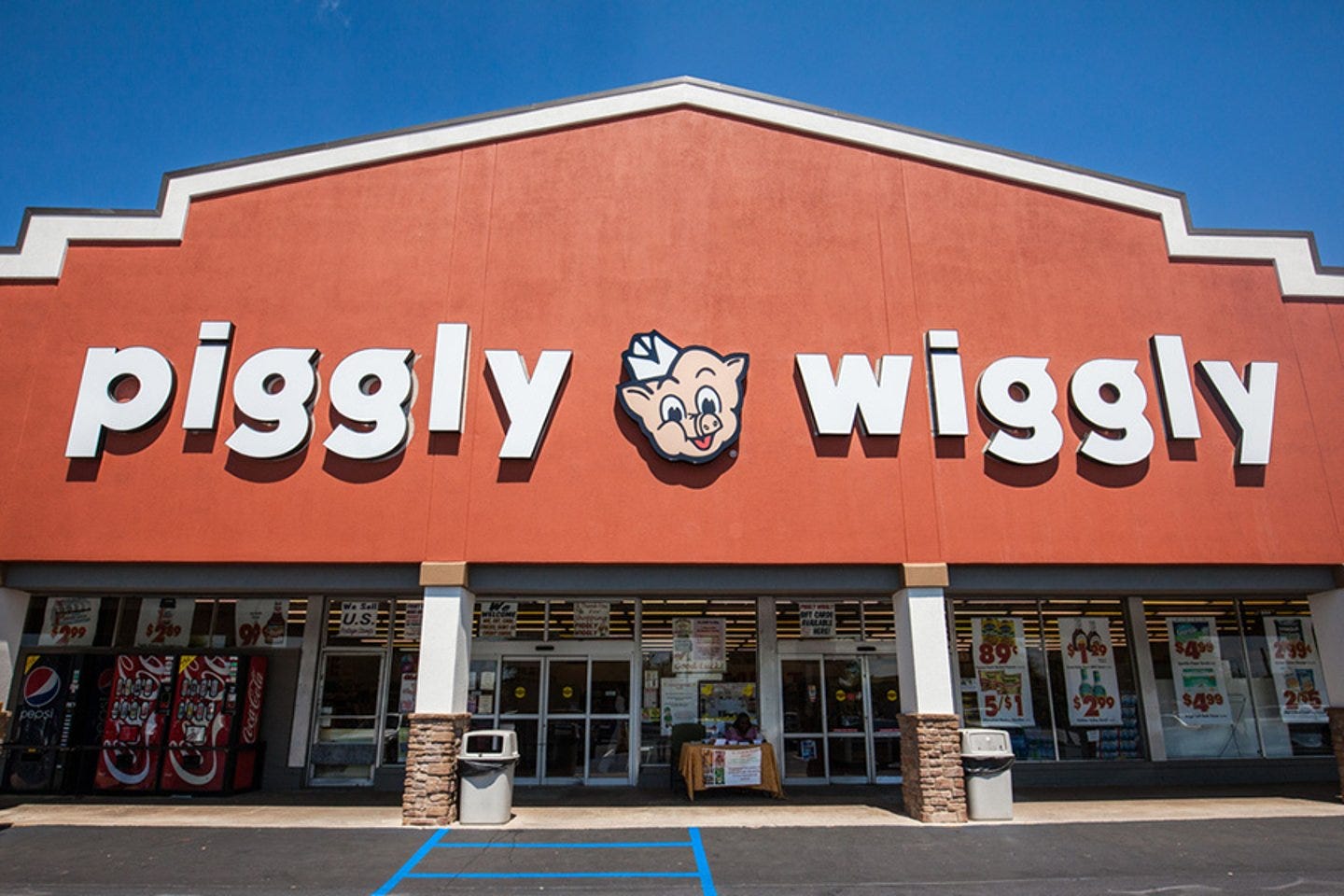
Apart from the opening of Selfridges in 1909, the first major change to the way we shopped came seven years later in Memphis, Tennessee, with the opening of the first Piggly Wiggly store. From its own website:
“Piggly Wiggly®, America’s first true self-service grocery store, was founded in Memphis, Tennessee, in 1916 by Clarence Saunders. In grocery stores of that time, shoppers presented their orders to clerks who then gathered the goods from the store shelves. Saunders, a dynamic and innovative man, noticed that this method resulted in wasted time and expense, so he came up with an unheard-of solution that would revolutionize the entire grocery industry: he developed a way for shoppers to serve themselves.
Despite predictions that his novel idea would fail, Saunders’ first store opened on September 6, 1916, at 79 Jefferson Street in Memphis. Operating under the unusual name ‘Piggly Wiggly®’, it was unlike any other contemporary grocery store. There were shopping baskets, open shelves, and no clerks to shop for the customer – all of which were previously unheard of!”
And that template formed the way we would shop right up until this point. Today, of course, that old way of serving the customer by clerks is better known as clienteling or personal shopping - a very VIP / luxury experience.
1971: Capturing product information
The story of how we came to be able to automatically capture product information began all the way back in 1949, when inventor Norman Joseph Woodland drew something in the sand of a Miami beach.
“What I’m going to tell you sounds like a fairy tale. I poked my four fingers into the sand, and for whatever reason - I didn’t know - I pulled my hand toward me and drew four lines. I said: ‘Golly! Now I have four lines, and they could be wide lines and narrow lines instead of dots and dashes.”
Norman Joseph Woodland, interviewed in 1999
Together with fellow student Bernard Silver, the pair invented the barcode. However, it wasn’t until the early 1970’s, with improvements in laser scanning technology, that use of the barcode finally became commercially viable. In fact, the first product ever scanned in a supermarket was a pack of Wrigley’s chewing gum in June 1974.
It revolutionised inventory management and accuracy, in addition to speeding up checkout queues and paving the way for self-checkouts.
Today, billions are scanned every day, and of course, not forgetting that one of the legacies from the Covid-19 pandemic is the widespread use of the barcode’s big brother, the Quick Response code, or, as we’ve come to know it, the QR code, which has permeated virtually every part of our lives.
1990: Surfers paradise
Although one can find several dates, it is generally acknowledged that the web was made readily available in 1990. Funnily enough, that in itself wasn’t the seismic event in the retail calendar; it was more about what it enabled: online commerce, or e-commerce as it became known.
Bear in mind that Amazon and eBay were still five years away; the growth of online, which, as we know, became the dot com boom (and bust) was gradual to begin with.
Here in the UK, one of the leading markets for e-commerce, according to the Office for National Statistics (ONS), online retail sales grew from approximately 1% in 2000 to over 28% of total retail sales by early 2026, peaking near 37% during the COVID-19 lockdowns in 2021.
Today, some retailers still wrestle with sales attribution when considering online sales vs in-store; however, most have accepted and built their business model around the fact that omni-channel never existed and that it’s now all just shopping.
2007: Macworld
There’s a great video of Steve Jobs introducing brand new Apple technology at Macworld, January 7th, 2007. The first few minutes are well worth watching:
This, of course, was the launch of the iPhone 1.
We didn’t realise it at the time - Facebook had only been around for three years, Twitter, just one year, and Instagram was still three years away, while it would take another nine years before TikTok arrived.
But, combined with social media, the smartphone shifted the dynamic between businesses and their customers by giving the consumer the power; power to comment, leave reviews, power to price compare, and, as we’ve seen on numerous occasions, the power to bring down an organisation.
Perhaps one of the most infamous examples of this happened in 2023, when the makers of Bud Light chose to collaborate with transgender influencer Dylan Mulvaney. Bud Light drinkers didn’t take kindly to the association and boycotted the brand, wiping over $27 billion off the market value of parent company AB inBev and over $1.4 billion in lost sales.
2026: And then there was
OK, so if you’ve got this far, you’ll be wondering, “when’s it coming?” and yes, it couldn’t be deferred forever, because all that’s gone before has led to this: the era of agentic commerce. Where the Metaverse flopped spectacularly, agentic commerce is set to be the next major milestone in retail and will revolutionise it in ways we can only imagine.
Agentic AI represents a shift from systems that simply respond to instructions toward those that can take initiative, make decisions, and act on behalf of shoppers. It holds the promise of redefining how people discover, choose, and buy products, both online and in‑store.
And unlike when we refer to ‘AI in retail’ in more general terms - what we’re, in essence, discussing is something which is retail infrastructure; what’s different is that agentic AI is front of house, in your face, and shoppers will feel directly.
Where We Are Today: AI That Supports the Shopping Journey
AI is already woven into the retail experience in subtle but powerful ways.
Personalised recommendations on supermarket apps and fashion sites help shoppers find products that match their tastes.
Dynamic pricing adjusts promotions in real time based on demand and stock levels.
Chatbots and virtual assistants handle basic queries, from delivery updates to product availability.
Computer vision powers self‑checkout systems and loss‑prevention tools.
These systems are helpful, but they’re still reactive. Agentic AI changes that dynamic entirely.
What Makes Agentic AI Different
Agentic AI doesn’t just answer questions - it anticipates needs, and completes tasks autonomously within boundaries set by the consumer. It’s our own personal, and personal shopper.
Three capabilities define this shift:
Autonomy: The AI can perform multi‑step tasks without constant prompting.
Goal‑orientation: The consumer sets the outcome, and it figures out the steps.
Continuous learning: It adapts to our preferences over time, becoming more accurate and more personalised.
And it’s not restricted to online only, in physical stores, it could:
Guide the shopper through aisles based on a shopping list
Compare products in real time
Suggest sustainable or healthier alternatives
Check stock levels across nearby branches
This is where the smartphone in our pockets becomes a co‑pilot for the in‑store journey.
The Future: A Retail Ecosystem Built Around Agency
As agentic AI matures, retail will shift from a product‑centric model to a customer‑centric ecosystem where:
Shopping becomes more proactive than reactive
Loyalty is built through personalised, anticipatory service
Retailers compete on the intelligence and helpfulness of their AI agents
Shoppers gain more control over spending, sustainability, and choice
Shopper Mark III
I’ve previously spoken on the concept of what I refer to as Shopper Mark II - the characteristics of the shopper post-2008 financial crash, and then armed with a smartphone and social media.
Agentic AI heralds the era of Shopper Mark III, now armed with agents, and for retailers, this has two significant implications.
It frees consumers to focus on what matters, while ensuring they get better value, better service, and a more personalised experience.
It means that the traditional brand / consumer relationship is being dismantled in favour of a brand / agent / consumer model, where the brand may never engage with its customers.
Hype or reality?
I’m old enough to remember a world without the internet, without email, without smartphones, without social media, and, let’s face it, all the downright pressure and stress that can accompany those things.
I’m also old enough to remember when the internet and email came along, and we were all told that this would make work so much more productive and efficient, leading to increased leisure time. And we know how that ended.
The reality of agentic AI is that we’re currently in the cross-hairs of a hype cycle; will agentic commerce become a thing? Yes. Will we enjoy more personalised experiences? Yes. Will we still be discussing AI in five years time? No, probably not even in three.
Just like self-service, barcodes, the internet, and smartphones, agentic AI will rapidly become part of the new normal. Short of inventing teleportation, humans accept new technology for what it is and are incredibly adaptive, adopting it with relish.
As Jason Dorsey, President of the Center for Generational Kinetics, once said, “Technology is only new if you remember it the way it was before; otherwise, it’s what you have always known”.
Because, to predict the future of AI in retail requires alternative imagination.